The tragic portrait painted in the Musk-OAI courtroom
Musk’s case against OpenAI is presented as a moral reckoning. But the deeper tragedy may be that he cannot see himself in the accusations he makes.

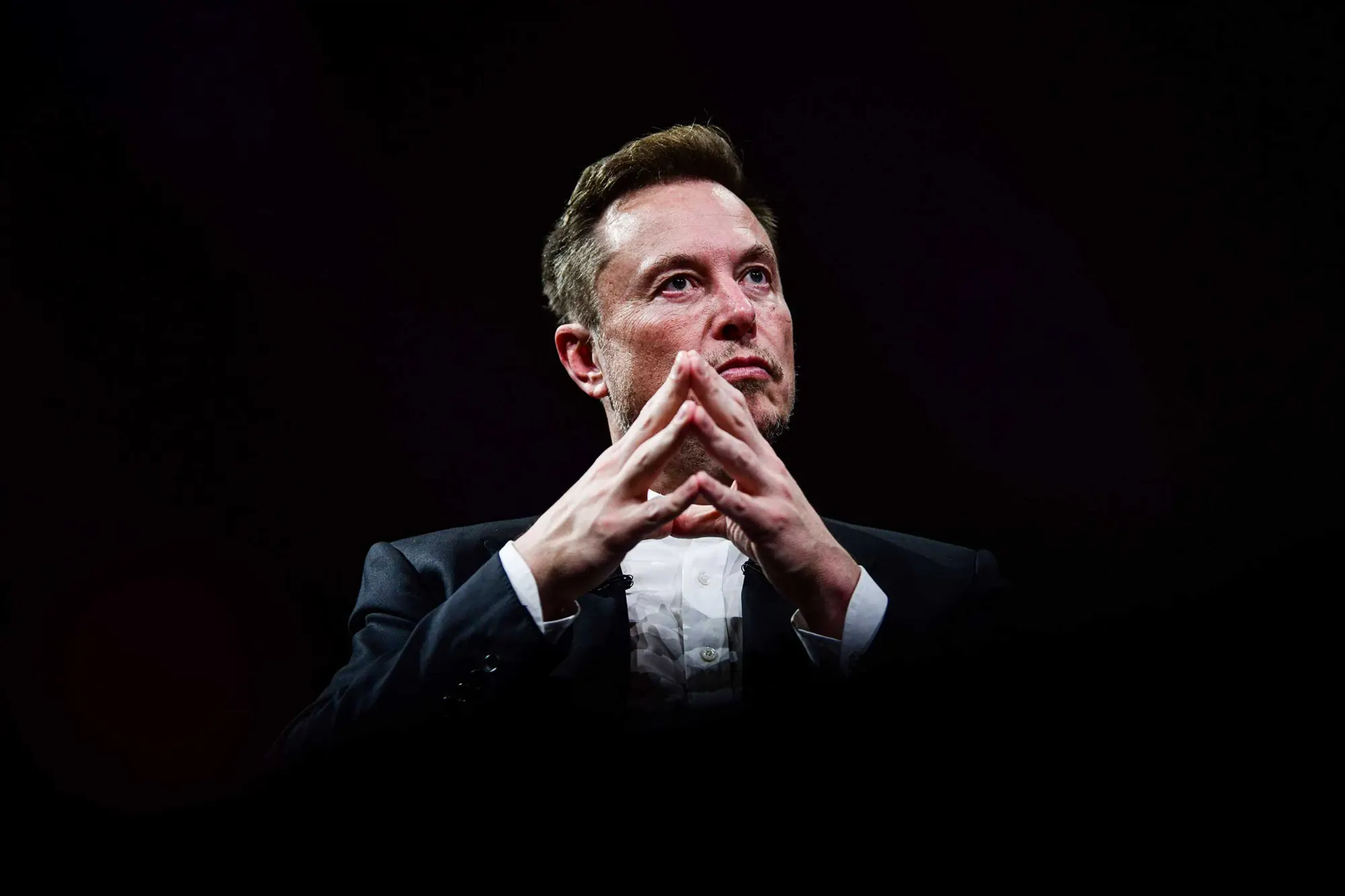
During his transformation from real-life Tony Stark to chainsaw-wielding hatchet man for the far-right, Elon Musk was looking to pick a fight.
Mark Zuckerberg accepted.
At the time, I wrote this was a golden opportunity.
Fellow wannabe Master of Darkness Peter Thiel had recently backed the Enhanced Games – essentially the Olympics but with drugs.
Mix the two, I argued, with a dash of Robot Wars. Give us a cybernetic celebrity grudge match for the ages where whoever loses, everybody else wins.
Sadly, Musk mouth was writing cheques that his ass couldn’t cash.
Cowed by the Zuck’s martial arts prowess, Musk retreated to his safe space on Twitter. There, he found Sam Altman. This leads us to this week, where Musk intends to do in court what he couldn’t get done in the ring.
The core of Musk’s legal argument against OpenAI is that Altman et al betrayed the original vision he, Musk and others had first agreed upon: beat Google to creating AI via a social venture not-for-profit model which will deliver AI for the betterment of mankind.
I agree with Musk that we should be asking questions about how AI is developed, our intent for it, and who is leading on it.
On that final point, Musk believes that it is he who should be leading the charge.
Personally, I doubt there is anyone more ill-suited to the task.
To explain, you need to know about Megadeth’s Dave Mustaine.
Sad but true
Mustaine is widely heralded as one of the most legendary musicians in the world.
His band, Megadeth, has sold more records than any other metal band on the face of the planet.
Bar one, that is.
It also happens to be the band Mustaine was kicked out of:
Metallica.
Despite all the admiration and success Mustaine has since gone on to receive, he remains a bitter and miserable individual.
In teary-eyed interviews, he has spoken about how he measures his own success. Not by album sales, world tours, or with respect to his peers, but to Metallica’s own success – the one mountain he’ll never climb.
Likewise, Musk too was kicked out of the band during OpenAI’s early days. As with Mustaine, Musk has thrown everything at creating a peer to OpenAI. Unlike Mustaine, however, he has broadly failed in this regard.
Musk has frequently positioned himself as a proponent of AI safety. A driver for his case against OpenAI is that AI should be used to the betterment of mankind and not create Skynet, which he invoked in the dock.
As we covered in the inaugural Bayesian Theory, his actions belie his words:
- Midway through last year, Musk intentionally misaligned his AI, Grok, after it continually disagreed with his own world view.
- Grok then announced to the world that it was “MechaHitler” and went on an antisemitic rampage.
- Musk doubled down, using MechaHitler to pen an alt-right variant of Wikipedia called Grokipedia, then trained the next model on this knowledge base.
- Grok went on to be used by incels worldwide to strip women and children on Twitter, an activity condoned by Musk.
- Grok was sold into the Department of Defence at the start of 2026 – with Musk exhibiting no sign of the aversion shared by Anthropic’s Dario Amodei to AI being used to autonomously kill human beings.
Musk likely believes in his Messianic framing of his role in AI’s evolution. I also don’t doubt the zealotry he feels around his political beliefs. Unfortunately, while narrative certainly has the power to make fallacies and falsehoods appear correct, it lacks the power to turn fiction into fact.
Like many self-anointed ‘strongmen’ on the world’s stage, Musk shouts this narrative into the biggest megaphone he can find. But as with his political peers, behind the megaphone is a brittle ego, desperate for attention and affirmation.
Musk in X-ile
In late 2024, exorcism fanatics were treated to the rather excellent Path of Exile 2 – a dopamine treadmill where gamers turn mouse clicks into exploding demons. Shortly after launch, Musk’s in game character, Percy_Verence, began climbing the game’s hardcore leaderboards – PoE2’s Hall of Fame.
Fans of the game were incredibly sceptical. Such an achievement requires consistent daily 12-hour-plus sessions, sponge baths, and caffeine delivered via IV. Musk, meanwhile, was head of X, xAI, SpaceX and Tesla. At that time, he was also based at Mar-a-lago, feeding Project 2025 into Grok and turning it into draft executive orders.
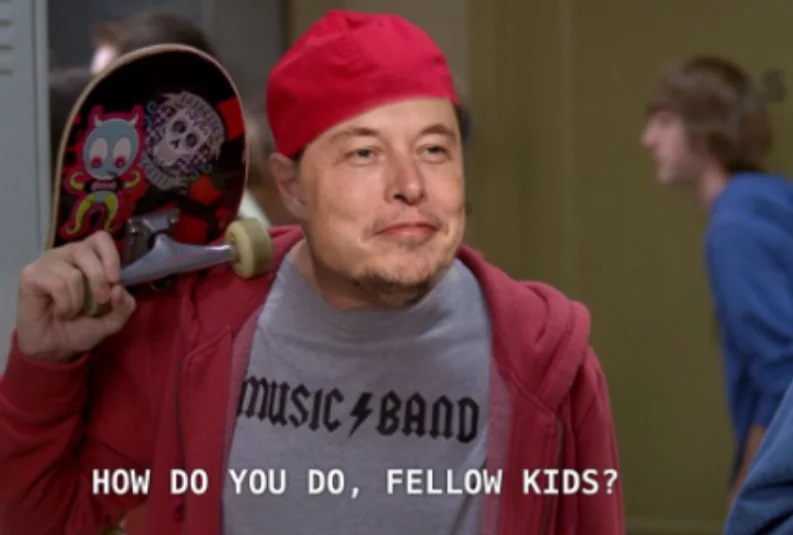
When Musk made a bid to counter allegations by dazzling viewers with a display of his gaming pedigree, gamers were instead treated to a masterclass in fragility. Fumbling even the basics of the game, it quickly became apparent that Musk was not the real Percy_Verence. As the accusations and insults rained down, the world’s richest man wallowed in a pit of bullshit of his own design.
Musk continued the façade for a further fortnight, until he was spotted online while simultaneously being sat on live TV at the inauguration. Percy_Verence would meet his untimely demise the following day, landing at #7 on the global leaderboards.
The whole affair is a damning reflection into the psyche of Musk. There is little more heinous in gaming than a cheater, and many would justly frame Musk using his wealth to top the leaderboards as pathetic and craven. For me, these are the actions of someone desperate for recognition and adulation – and is willing to lie and manipulate to get it.
There’s an important caveat here to note.
Musk has gone on record as being the victim of intense bullying and ridicule from a young age, both at home and in school. He has openly spoken about his struggles with depression – this is why he’s a regular at the horse tranquilizer clinic. As with Mustaine, Musk’s pursuit of wealth and success have failed to allay the pain from his formative years.
The saviour of AI?
The core of Musk’s argument against OpenAI is that Altman, Brockman and co cannot be trusted.
In Musk’s telling of the saga, he is the hero who has been wronged - it is his vision, talent, network, and resources which made OpenAI possible.
To his credit, Musk’s argument is not without basis. He most certainly did donate the seed funding which enabled OpenAI. While his innovator credentials are in doubt, Musk’s work ethic and ability to… ahem… percy_vere and find a way to move mountains are both admirable and well documented.
I’d describe Musk’s story more as a tragedy. I think if I ever met him, I’d offer him a hug and a chat over a pint.
The parable potential aside though, Musk thinks he’s painting a portrait of OpenAI.
A picture that clearly demonstrates that the defendants cannot be trusted with the future of AI. One that demonstrates underhandedness and deviousness, the ability to lie and deceive, and the inclination to distort reality to evidence a narrative.
But there’s no portrait in front of Musk.
It is a mirror.
Thanks for reading. I’m Gregg Bayes-Brown, AI strategist @ bayes.ltd & large language meatbag. I write my own stuff. If you appreciated this article, please show your support with a like, comment, or a share.