How to succeed at AI adoption and enablement
Failing to see gains from your AI adoption efforts? You aren’t alone.

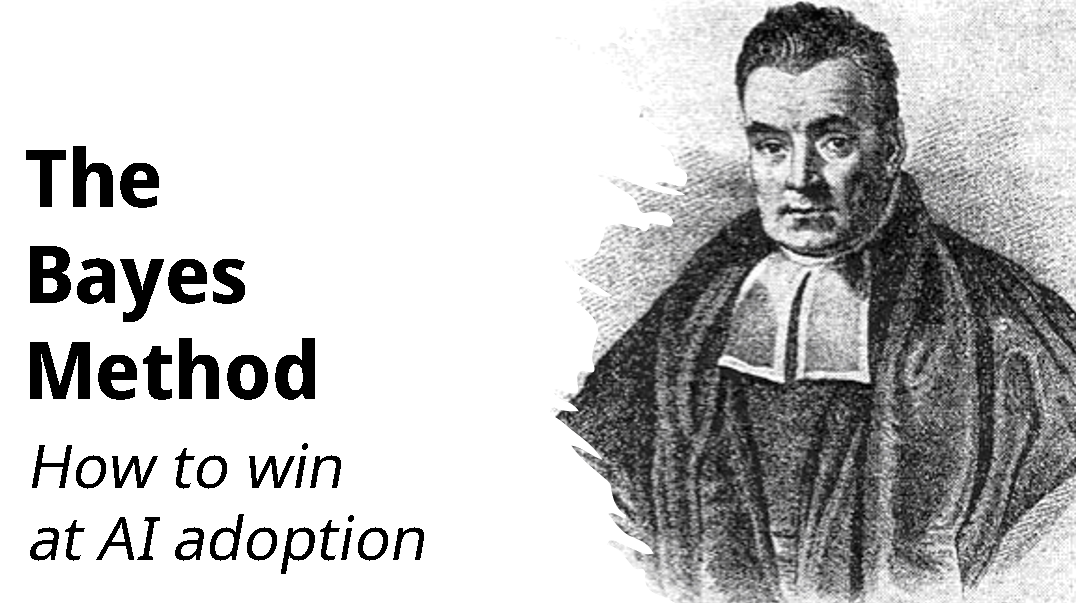
MIT’s report demonstrating that only 5% of organisations are succeeding with AI is a year old, yet hardly anything has changed. Here’s how to do it from someone who can get you into the top percentile.
AI is risky business. Or, rather, it is a risk to your business.
It’s been a year since MIT dropped its infamous paper demonstrating that AI adoption was hitting a wall at organisations, yet little has changed. We’ve had the MBB mafia and private equity move in, while tech firms recruit armies of Forward Deployed Engineers (FDEs). Even so, gains remain glacial.
In his latest piece, Anthropic chief Dario Amodei claims AI adoption and deployment isn’t failing because organisations are “missing some important theory or insight”.
He is, unfortunately, spectacularly wrong.
His peer at OpenAI, Sam Altman, already hit the nail on the head a couple of weeks prior, when he said that changing people’s behaviour “is much harder than the tech nerds realize.”
What Amodei has missed and Altman is only just realising is that making this work is nothing to do with the model, the tech, or the number of engineers you deploy.
It is people-shaped problems.
Overcoming this challenge is not something you can achieve in reading a single blog post. But if any blog post is going to help you do it, it’s this one.
The Bayes Method
When I got into AI, I didn’t build cheap vibe-coded product built on quicksand. I took what I learned in my own AI journey and turned it into strategy.
I’ve since rolled it out at a range of orgs (biotechs, venture builders, social ventures, etc), used it to do exec coaching, and underpins the rollouts of Claude, ChatGPT and Copilot I’ve led on.
The strategy draws on decades of psychology, sociology, and tech adoption research. It uses every scrap of research I could lay hands on around AI adoption and the relationship we as users have with the technology. Use cases from the AI labs, well established change management and organisational planning, thought pieces from business leaders and academics alike, and MBB consultancy papers all made it in too.
The end result is the Bayes Method, named not after me, but Thomas Bayes. His work centuries ago is what laid the foundations for AI, and I used Bayesian reasoning as my guiding principle in applying, testing and correcting the entire approach. I found it to be so effective that it also features in both how I teach leadership teams techniques for navigating uncertainty of the current age, as well as in my enablement coaching.
Alongside Thomas’ work, many books were read and studied furiously – ranging from books on AI to business to psychology and neuroscience.
Yet the book I started with was one you probably wouldn’t expect.
It was Meditations by Marcus Aurelius.
The Obstacle is the Way
When my identity as a writer came under threat when ChatGPT launched, there was a night of intense soul searching. But as a stoic, the response was inevitable: we cannot choose what befalls us. We can only choose how we respond.
Old Marcus would only respond one way to such adversity: head on.
I treated ChatGPT like a gym: hit it daily, get in the reps, train to failure.
I didn’t fear mistakes because the biggest mistake would be doing nothing. Over time, as pain became progress, fear subsided. In its place: confidence. That’s when I asked myself the question I now ask every C-suite team I work with:
“Given this new capability, what challenge can I now achieve that wasn’t possible before?”
This is the core reframe that turns AI from glorified printer into genuine impact. We move from seeing as AI as product to intelligence strategically applied to our ambition.
One person who’s no stranger to ambition and challenge is Arnold Schwarzengger. He’s risen to the top of every field he’s entered. Behind every success was a vision: he pictured his Mr Olympia wins years before they happened, saw his name on theatres when directors just saw a henchman, and imagined signing bills into law while most thought he was a joke candidate.
His secret: it takes the same amount of energy to write a small vision as it does a big one.
A great way of setting this ambition comes via Erica Farmer (give her a follow), who recommends thinking of it in terms of the AI dividend: what we do with the benefit.
The kneejerk for many is to reinvest into productivity. But without a driver, that engine’s going nowhere. Worse, it’ll just keep spinning faster until it redlines and burns out.
To counter this, bring people together and ask them: “where should we reinvest our time?”
This could be a four-day work week, more time with clients, more time for skill development. Whatever it is, it should be something employees own. It should be a concept powerful enough that they are willing to venture into the unknown, break old habits, and embrace a new way of working.
This is not something leadership can decide for them; we all need to decide the direction together.
None of this will be easy, nor do you want easy – easy is for Sundays and beach holidays. What you want instead is ambition, aspiration, and challenge. As the man said, it’s a long way to the top if you wanna rock ‘n’ roll.
Make no mistake: everyone now has to run a marathon.
Many won’t even get their trainers on.
Plenty will quit after the first mile.
For those who go the distance, there’s two ways to do this. One has them doing it with friends, cheered on by their family. The other has them running it in the rain, by themselves, while their boss cycles behind them with an axe.
Both will be a day they never forget, only one requires life-long therapy to recover from.
It’s a contact sport
The quality of outcomes with AI directly correlate to the mindset, skill and intent of the user. Further, while researchers obsess over Skynet, those of us with a more grounded understanding of risk knows where it actually sits: the user.
The risk matrix behind AI for organisations has breadth and depth that’d make Evel Knievel join the civil service.
All of it – reputational damage, competitor advantage, data leaks, psychological hazards – begins and ends with your users. Simultaneously, the equally wide-reaching opportunity profile can only be unlocked by your users, and they can only do that once they master risk.
Mitigate the risk, maximise the opportunity.
What we are presently doing instead is handing jet planes and not considering the pilot. The end result is that you’ll be lucky if any get off the ground, and in rather deep trouble if anyone succeeds.
If you want to win at adoption, you’ve got to show your people how to fly. Further complicating the issue are the three real barriers to AI. Forget the LinkedIn chin-stroking, the real antagonists here are:
Anxiety. Arrogance. Ignorance.
Some fear the jet plane. Others think they can fly because they know how to drive. And others don’t even know jet planes are an option.
Skynet does not cure fear of Skynet. Insisting you can fix people-shaped problems with a wrench does not change reality. And others won’t understand what a jet plane can do until they are behind the controls.
What moves the needle is hands-on, boots on the ground, lead from the front empowerment. To build courage, we must look someone in the eye, show we understand, and win their trust. To root out arrogance, we must embody confidence. To encourage someone to learn, we have to show how engaging will benefit them personally.
In all cases, we must create room for our people. Psychological safety is the bedrock, stoicism is the fuel, Bayesianism is the safeguard. Our goal is a culture in which experimentation, innovation, and collaboration can thrive. Continuous development requires that failure is celebrated as data which moves us toward success, and where our people are safe to stick their neck out, ask questions (no such thing as a dumb question, only dumb answers), and build collaboratively in the open.
Seize the means of automation
Many leaders will read this and throw in the towel. They’ll look at the marathon ahead and wither in the face of it. They’ll call in third-party vendors, FDEs, and consultants in their attempt to pass the buck.
They will fail.
They’ll be the ones left on the coach while you and I run the distance.
What we’re going to do instead is use our greatest asset – our people.
These are the folks who understand our greatest challenges better than anyone else, even us. Right now, they are afraid, unempowered, and imprisoned by legacy approaches. Our response will be to bring them with us on this journey and elevate them so they can show us the way.
Engineers? Where we’re going, we don’t need engineers.
For my work, I use a tech adoption framework built on five pillars: Advantage, Trialability, Compatibility, Complexity, and Observability. This, eagle eyed readers will note, is the Rogers 2003 framework, recently reissued in the Pissarides Review into the Future of Work and Wellbeing (2025: Imperial, Warwick).
I offer a sixth and central pillar: Empowerment.
Enablement that empowers in AI is not just a powerpoint of features, a slap on the back, and a hearty good luck.
It’s been three decades since computers began their own adoption journey. Yet despite all the things you can do with a computer, your organisation still runs at the speed of the user still typing with their index fingers. Why do they do this? Because no one took the time to show them how to type.
My approach to enablement begins with employee-led self-discovery of use cases within their work. We ensure people see for themselves the strategic advantage AI can deliver to them personally. This then frames the narrative arc of the rest of our enablement sprint, while also delivering trialability by getting hands on the platforms immediately.
Once again invoking Arnie here, you can’t expect your folks to enter the AI gym, do once bicept curl, and walk out looking like the Terminator. Achieving that takes reps. Reps, reps, reps – and we train to failure.
The sprint’s arc adds layers of understanding and technical ability each week. We reinforce that by encouraging self-directed exploration and the time for employees to engage in this activity.
As we advance through the sprint, we both demystify the complexity of AI through developing fluency and ensure compatibility by putting users in the driver seat of AI’s application to their workstreams.
The sprint wraps in a company-wide hackathon, where interdisciplinary teams work together on the challenges we are yet to solve, reinforcing a collaborative culture while delivering real solutions.
Alongside the hands-on learning, I also embed psychological safety and provide instruction on how to keep users removed from negative cognitive impacts through AI use. I combine this psychology-first approach with philosophy to help users navigate rapid change and aspire to challenge (Stoicism), how to utilise divergence, probabilistic systems, and make decisions when the way is unclear (Bayesian reasoning), and frameworks for effective communication (Socratic method, Supercommunicators).
In short, we encourage them to see the process as one of mastery, achieved through repetition, experimentation, and framing failure as data for continuous improvement.
That’s why my secret sauce is the Hero’s Journey.
In writing, the Hero’s Journey (the narrative arc sitting behind every great story you’ve ever read) is one of rising to challenge and mastery. From Luke learning the ways of the force to Neo’s journey to the One, the protagonist’s story relies on developing skill - using their craft to push through adventure, anxiety and adversity – to ultimately overcome challenge.
It is through this narrative that users become protagonists in their own AI adoption journey, with AI as the catalyst, to deliver our final pillar of empowerment. This turns what turns anxiety into agency.
The engine of change
The mechanism we need to build which drives this is, essentially, Toyota Way for knowledge work. Once we have empowered our users, we go to them and ask where they feel the greatest pain in their work.
Charles Duhigg’s The Power of Habit provides an excellent case study for how this looks in practice. Back in the 80s, the new chief of aluminium-firm Alcoa cleared a room of investors by saying “we will only do one thing now: safety”. One such investor who dumped all his stock said after “it was the single worst piece of advice I ever gave.”
Alcoa was suffering from its own Terminator problem, albeit more people falling into molten pits rather than anything to do with AI. The CEO’s response was to create a self-improving cycle around safety. Leadership gave permission for staff to come up with solutions to its biggest challenges, which were then fed directly back to leadership.
Workflows were reimagined. Processes were documented and refined. The pits got barriers.
As a result, morale soared, sickness plummeted, and productivity went through the roof. He’d given his people a safety-shaped crowbar, and told them to dismantle everything that stood in their way. I do the same thing, but with a cyber-crowbar.
A framework I use here is Navigators, Cartographers, and Scouts who guide us as we navigate uncertainty. Navigators are strategists - your CAIOs, Heads of AI. They sit with leadership, answer to the CEO, and are empowered to access business systems and drive change at the high level. Cartographers are T-shaped generalists – engineers, commercial, comms & people, operators – who have both specialist depth and generalist breadth, underpinned by deep AI practitioner skills. Scouts are AI champions – empowered superusers given additional support and training to act as on the ground coaches and the first port of call in a pilot-to-production pathway.
The size and investment depends on the organisation. For a small business, a fractional Navigator will likely suffice. Conversely, an organisation like the NHS will require multiple groups of Cartographers – a Forward Deployed Unit – acting as spec ops teams sent in to train and empower the militia.
Together, these are the people who will pound shoe leather into every team, engage every person closest to a backlog, a source of burnout, or a broken process – the very same problems that are an organisation’s chokepoint to growth. They don’t go in and tell them how it’s done, however. Instead, they ask:
“How can we support you in solving this problem?”
That is the core of Toyota Way. When there’s a problem on the production line, the whole line stops. Supervisors and managers alike go to the person who pulled the chain, not with recrimination, but with the intent of empowering the person closest to the problem in solving it.
Their answer is also the answer to an organisation’s greatest challenges.
But great ideas don’t automatically float to the top. Innovation must survive many pitfalls before it achieves impact. The goal of the Navigator is to protect that phase transition between ideation and franchising it at scale.
I use a three-gate process, the pilot-to-production pathway.
Gate one, you work with the person with the idea, their line manager, and the scout to agree on how it aligns to strategic objectives, what a pilot to test the idea looks like, where are the risks and costs to consider, who it impacts and thusly must be consulted first, and what success looks like.
Gate two, using a skunkworks budget divorced from IT and usual procurement (otherwise you’ll spend months setting up a quick test), run the pilot. Post pilot, run the autopsy. Our partners in gate one come back together and decide whether or not to proceed to gate three: leadership.
Again, this depends on size of organisation, but a leadership team with purse-string power should meet once a month to not only discuss AI adoption at large, but to weigh in on Gate three. Yes, the Wispr Flow pilot was a success, but does a company wide rollout meet the cost/benefit criteria? This is where that question gets answered, and anything moving to production can be properly resourced and governed.
This is how your organisation delivers top-level oversight that enables grassroots innovation, and the route back to C-suite which turns that innovation into action.
Adopt, improvise, and overcome
There is, of course, much more to all of this. But if adoption is left unresolved, this – I believe – is what will be the trigger for the bubble burst. Not because the tech doesn’t work (it does) or there isn’t demand (it’s overwhelming), or even the circular financing (although that will be a catalyst).
It’ll be because organisations who fail at adoption will get leapfrogged by AI native insurgents or Chinese peers, or overspend on bunk deployments, or see their whole business model replaced (or all of the above). The end result, I fear, will be catastrophic failure of organisations across multiple sectors.
Consequently, I am working on a book detailing this approach. But given the speed of progress, I wanted to start getting some abridged notes out.
I hope you find it useful in your own journeys, and please do ask any questions.