Sam Altman: we were wrong about AI adoption
A little louder for the geeks in the back.

Despite AI’s exponential curve into infinity of late, it’s been something of a rough period for the engineering monoculture dominating the hearts and minds of Silicon Valley’s tech elite.
First, the dream of replacing humanity with a few cheap models and some RPA sticky tape was left in ruins upon first contact with reality.
Next, despite a marketing spend that could eradicate hunger several times over, public support for AI continues to nosedive harder than the SpaceX share price.
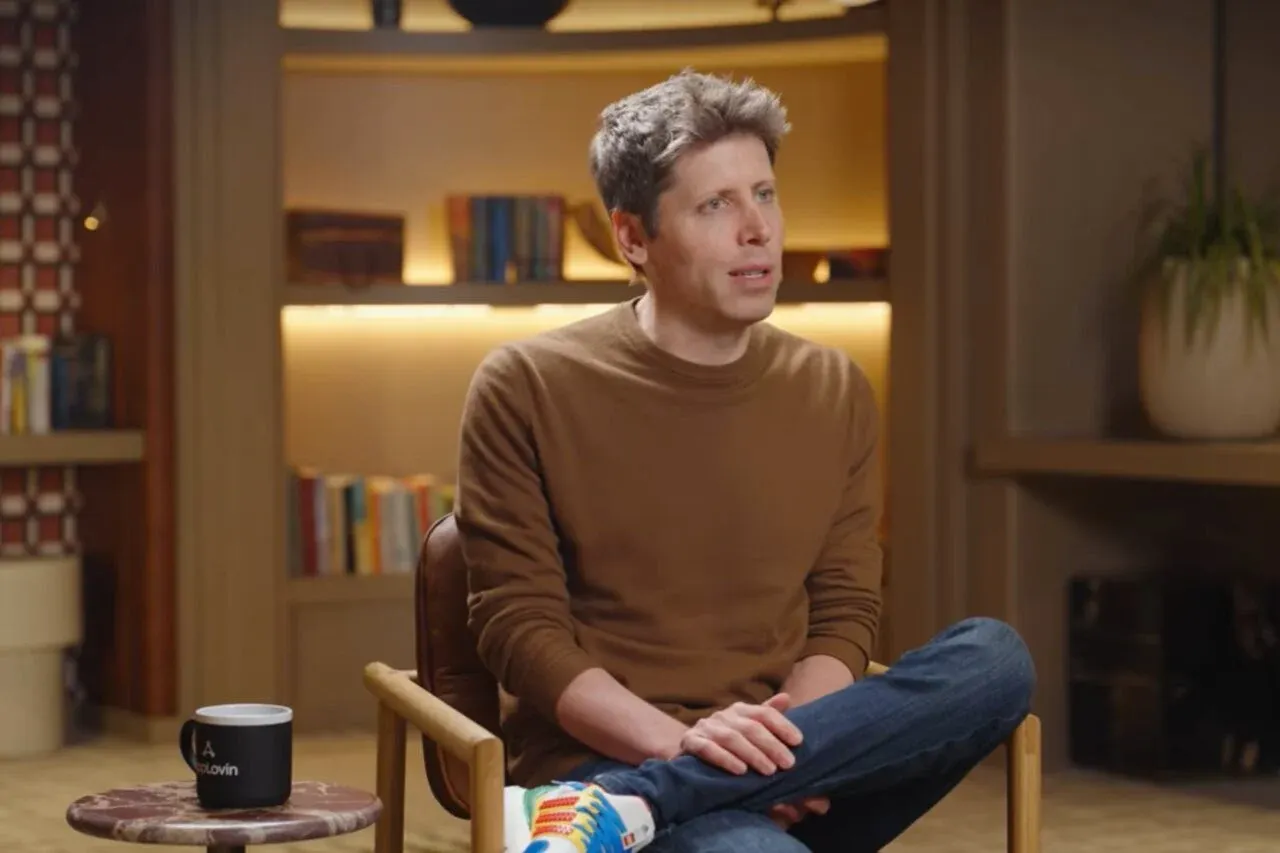
Now, OpenAI chief Sam Altman has admitted that failed AI adoption efforts mean AI is going to take far longer than expected to come to fruition.
The root cause? Those pesky people-shaped problems.
“I think I was wrong about a few things,” confessed Altman in an interview with podcaster David Senra. Unpicking ingrained habits and changing people’s behaviour are “much harder than the tech nerds realise” said Altman, while reframing the birth of the Singularity from soon to not-so-soon.
As a result, I’ve now cancelled my groceries agent as I will be gorging on this schadenfreude for years to come. The monoculture’s arrogance is one of the biggest unmitigated risk factors in AI, and a solid serving of humble pie has been a long time coming.
Simultaneously, can kicking AI’s ascension into the long weeds of “TBA” invalidates many of the short-term bets placed on AI. The spend on data centres is concealing an American economy in deep recession, and that spend has a half-life. The economic value of a data centre is directly tied to the lifespan of the chips inside: 3-5 years max.
Therefore, should something happen which pushes the expected demand horizon beyond the lifespan of its supply infrastructure – such as engineers completely neglecting to train any pilots for the jet fighters they are pumping out – then the whole thing goes nuclear.
Fortunately, this outcome may yet still be avoided – and I’ll spell out exactly how in this piece. But first, it’s critical to understand why this has happened.
The Hedgehog and the Fox
Back when I started doing what I do, I had a machine learning chief scoff at the very notion of what I was trying to accomplish. AI didn’t need enablement, it just needed more engineers.
This, as I would later discover, was not a unique take, but the prevailing view of the entire engineering community.
Predicated on an agentic vision now demonstrated to be bunk, this ML chief and his coder mates saw (and probably still see) human labour as just another engineering problem to solve. This is how the monoculture sees every problem: just throw spanners at it.
What it wreaked of to me, as someone who’d seen the exact same worship of the deeply technical mind at Oxford University and other places, was epistemic arrogance.
In his 1953 essay, The Hedgehog and the Fox, political philosopher Isaiah Berlin gave us a framework for understanding this problem. Hedgehogs are intellectuals who see the world through one prism, ala Plato – specialists in one niche area. Foxes, however, are generalists akin to Aristotle who refuse such a limitation and instead seek to understand as many fields as possible.
Engineers are hedgehogs. They really only do one thing – coding – and they do it damn well. The problem comes when success from deep expertise is mistaken for broader general intelligence, leading to arrogance borne of ignorance of other disciplines. You put a bunch of hedgehogs in one place, throw money and endless praise at them, and you get a monoculture that works counter to their best interests.
Innovation is, after all, a divergent game. Homogeneity of thought is precisely how you kill it.
This is exactly the bull trap Silicon Valley has run into. While engineers have done much for the modern era, their failures are staggering and wide-reaching. An anxiety-ridden youth, the spectacularly corrupt seizing power, and even civil wars all lay at their feet.
The root cause is obvious to anyone who’s even glanced at social sciences. Engineers, for all their technical ability, are often completely devoid of the one thing that’s actually important in AI adoption: people skills.
Technopriests on pilgrimage
A kneejerk of the monoculture to stalled adoption has been to do what it always does: send more engineers. The latest manifestation of this failed ideology has been the forward-deployed engineer.
The concept is that us proles simply don’t get AI, and what we need is a big, bad SWE to come sort us out. These guys come in, build agents, and exfil.
Now, a company is fully AI-native and can fire all its humans, right?
That is, of course, until it breaks. Or does something weird. Or someone forgets to insert the right data into it. Or one of the 42% of Gen Z actively involved in sabotaging AI adoption in the workplace lays hands on it.
Then what you’ve got is a company in failure mode – its critical business functions dependent on third-party FDEs, with no in-house skill or indeed knowledge of the system upon which the entire company is now built upon.
That is, of course, if you even make it that far.
To effectively build an agent, one must either be an expert in precisely the workflow you are looking to automate, or a skilled communicator who can support that expert.
Engineers are neither.
The fix here is relatively straightforward, but entirely in the blind spot of a hedgehog engineer.
It’s foxes.
The gift of the gab
For all the hype, AI isn’t all that different in tech adoption terms to those that have preceded it. Rogers 2003 framework, for example, acts as a great foundation. There is, however, one stark difference which often goes missed:
AI is the first technology which requires theory of mind to be taught to effectively use it.
This is because the truism that AI is a tool is nonsense. It’s intelligence as a utility – thinking sand to be applied strategically to one’s greatest challenges, not a hammer to be swung wildly at anything looking like product.
As a result, the quality of AI outcomes directly correlates to the mindset, skill, and approach of the user. The technology takes intent and turns it into reality. Bad users, bad AI outcomes.
In the Hugging Face saga, much has been said about the AI. Nothing has been said about the engineers who built it and set it in motion.
From an organisational lens, the user is where nearly all risk with AI sits. It’s also where all the opportunity unlocks. While IT chiefs spiral out over their zero-risk bias toward data leaks, orgs miss the bad user asteroid heading toward them.
Think of it like Iron Man’s suit. Tony Stark puts that thing on, and you get the Avengers saving the day. I put it on and - one fumbled button later - suddenly half of Bedfordshire is no more.
To change the outcome, I don’t need Tony to come and tweak my exhaust pipes. I need him to explain to me which button makes it fly and which one deletes Luton.
The same is true of AI adoption.
In my experience as a CAIO – a forward-deployed leader, if you will – the approach which gets results and leads to successful AI adoption outcomes is polar opposite of how the labs think it is.
It’s not remote-first, PowerPoints from IT, replace everyone with robot garbage. It’s boots on the ground engagement of professionals closest to the biggest problems an organisation faces.
It involves looking people in the eye and talking about what they fear and turning it into agency. It’s establishing psychological safety and organisational alignment critical for the experimentation and innovation that comes next. It’s about inspiring people with leadership from the front, pounding shoe leather into every team across an org, and taking an interest in people and how they work.
It is, in short, about human empowerment.
You elevate, you encourage, and you educate.
Then, and only then, will an organisation have the fluency and literacy skills necessary to have the organisation-wide conversations about breaking down silos, establishing frameworks for collaboration and co-creation, and reimagining workflows which get results.
This can only be achieved by AI practitioner generalists stacked in the humanities and social sciences. The very same folks Anthropic’s research demonstrates are both catching up with and straight up outclassing engineers at agentic coding.
All of this puts me in a position I’d rather not be in. I’ve been saying this for years now. Being a Bayesian (by both approach and ancestry), I have spent much of this time actively trying to disprove everything I’ve just told you. Because if I’m correct, that means that some working-class bloke from Leighton Buzzard understands AI better than Sam Altman – a concept so ludicrous I struggle to wrap my head around it.
And yet, here we are.
The evidence continues to pile up. I see directly from my own work that my approach works. Research papers, consultancy reports, and stories of bungled adoption from all sides have been mounting up for a year and only strengthen my case.
The labs and the engineering monoculture that guides them are going down the wrong path. The consequences could very well bring down the economy. This cannot be allowed to continue.
If the AI overlords truly want this to be a success, they need to get out of their ivory towers and they need to do it now.
If you care about AI being a success and have an in with a lab, please send them this piece. Tell them that the problem is us, and that we must address our side of the human-AI bridge. Make them understand that we cannot solve people-shaped problems with engineers, and that the secret here is empowering humans, not agents.
Good users, good AI outcomes.
Thanks for reading