Resistance is futile: first contact with the Microsoft collective
If Elon Musk is unleashing Skynet and Mark Zuckerberg runs the Pay-per-click Maximiser, Satya Nadella is ushering in the Borg.

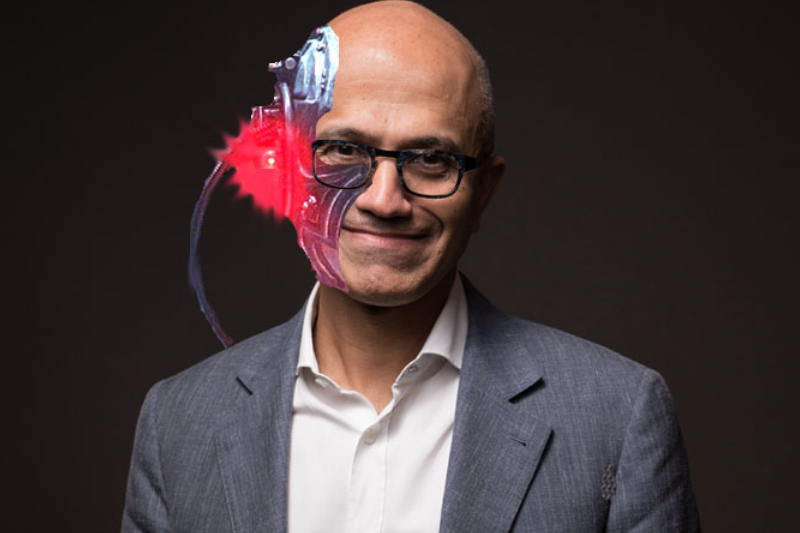
The Borg are one of sci-fi’s greatest villains. Cyber-zombies which forcibly assimilate whole species into their singular collective, the Borg share a strategy with Microsoft’s approach to innovation.
The GUI that Windows champions was first created by Xerox PARC and commercialised by Apple. Excel only got its moment in the spotlight after Microsoft strung up Lotus 1-2-3. Xbox didn’t appear until we were generations into the console wars. Microsoft’s approach to R&D is Ctrl-C, Ctrl-V.
To be fair, most tech giants use M&A or replication over true invention. But Microsoft stands alone in its ability to homogenise innovation: regurgitation for the masses.
This week, Microsoft’s AI Tour rolled into London. As such, I donned my red shirt, set my phaser to thrill, and went on a one-man away mission deep into the Microsoft collective.

You will be assimilated
There are some legitimately great things to say about Copilot.
Under the hood, you have a V8 engine in the form of the latest GPT models from OpenAI, and you can now swap it out for Anthropic’s own beasty offerings. Mustafa Suleyman – a DeepMind co-founder now leading Microsoft’s AI push – has long called for responsibility in an age of runaway hype. This is reflected in Copilot’s persona and its in-built data security. The big USP is that it makes confused CIOs smile.
Copilot Chat – the free chatbot on any Microsoft machine – is genuinely fantastic. Anyone can pick it up and start getting the reps in, and it’s often where many of the people I’ve coached begin their AI journey. As a product for beginners, it’s great.
The drive to lowest common denominator is where it all falls apart. Microsoft’s generic one-size-fits-all approach fails to recognise that no two organisations are the same. The Copilot persona oozes LinkedIn vibes. Combined with the heavy-handed application of bubble wrap, Copilot’s outputs veer violently into the mediocre.
If ChatGPT is Coke and Gemini Pepsi, Copilot is Tesco Value.
Your technological distinctiveness will be added to our own
To counter this, Microsoft goes for more assimilation. More M&As, more Copilot crowbars, more apps people don’t use. The collective is constantly growing. But each addition must conform and is beaten into blandness.
But what’s paid off in the past is not translating to AI success.
In its January 2026 earnings call, Microsoft revealed that of its 450 million M365 Copilot seats, the conversion rate to paying customers is 3.3%. The company claims around 150 million active users across the broader Copilot family, which sounds impressive until you put it next to Gemini’s 650 million and ChatGPT’s 900 million.
There’s widespread anecdotal evidence on Reddit of mass drop-off after enterprise deployments, wall-to-wall negative feedback of agents breaking constantly, and industrial vats full of buyer’s remorse.
Microsoft has, understandably, been coy about actual usage stats. A Gartner survey found 72% of Copilot users struggle to integrate it into daily routines, while the majority of firms see their Copilot engagement nosedive. Meanwhile, a Recon Analytics survey of 150,000 enterprise users in January 2026 found that only 8% prefer Copilot when given alternatives – a percentage that’s shrinking. Its market share among those surveyed contracted 39% in six months.
My mission was to discover if any of this was penetrating the Microsoft hivemind.
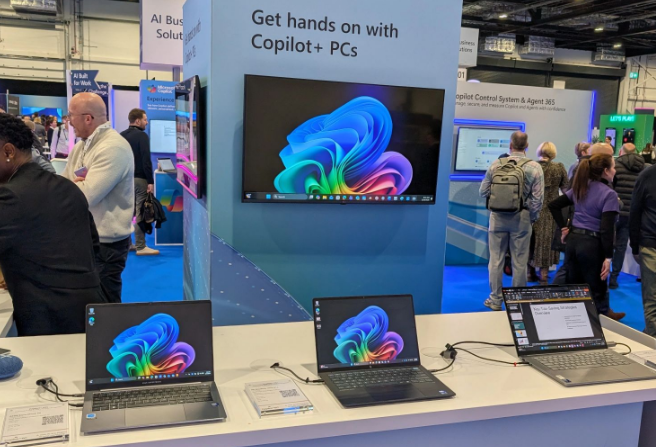
I was first greeted by wall-to-wall Copilot+ PCs. These NPU-powered machines have reported dismal sales – only 5% of AI PC sales in Europe – and there’s been no new solid data for over a year. Microsoft has shifted from promoting Copilot+ PCs to declaring that ‘every Windows 11 PC will be an AI PC’ last year, and at CES in January its new Windows AI Foundry moved flagship AI features to the cloud – making the NPU hardware it spent 18 months hyping essentially pointless.
Yet here they were, even though Microsoft knows that what was on display today was tomorrow’s landfill.
The event was packed with startups, some legitimately excellent like Fireworks AI. But others – companies directly threatened by Claude Cowork, a rival productivity suite from Anthropic which arguably makes better use of M365 apps than Copilot does – hadn’t even heard of Claude. The companies Microsoft is using to champion Copilot don’t know they are dead men walking.
Satya Nadella appeared equally tone deaf when he presented. The big shot in the arm for Copilot? Twenty new tools. The collective grows yet again, but is anyone getting converted?
We are the bored
The Microsoft employees I engaged with were, on the whole, completely oblivious and intensely arrogant. I presented Anthropic’s AI Fluency Index – which demonstrates just how badly most AI users are dropping the ball on how to effectively engage with these tools – to one senior executive who looks after Copilot onboarding and community.
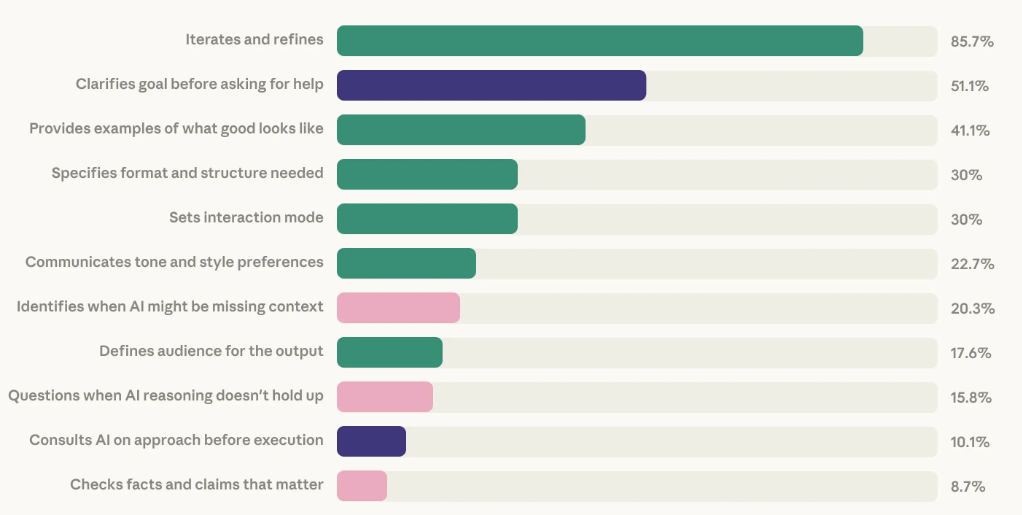
Their response? It’s okay because Copilot outputs have an up and down thumbs button now.
I often tell people that expecting AI to meet your legacy processes is akin to a typewriter firm in the 90s waiting for Microsoft to put out a typewriter OS. Yet here is Microsoft themselves, confronted with evidence of what they are missing, and trying to fix it with a Facebook like.
If Microsoft wanted to understand the barriers it’s facing, it had the perfect audience in attendance. I spoke to around a hundred people during my visit. The CEOs didn’t know how to prompt. The IT leaders – without a single exception – confessed that they were entirely lost and felt trapped by technology they didn’t understand. Everyone spoke of an underpinning anxiety.
Microsoft is actually in pole position to address this with its onboarding series, Masterclass. For a series called Masterclass, you’d be forgiven for expecting a high-quality pedagogical experience.
You would frankly learn more about AI by paying a fishmonger to slap you about with a mouldy trout.
I’m not just being glib. When running enablement for a FTSE 250, I tested the Masterclass against my own approach with a no-enablement control group for good measure. Colleagues who received zero training were more satisfied with free Copilot Chat than Microsoft-trained colleagues were with the full-fat paid equivalent. Microsoft’s Masterclass scored 2.8 out of 5 and yielded around 2.5 hours gained per week. My psychology-first enablement – on the same free Copilot Chat – scored 4.7 out of 5 with over 5 hours gained per week.
Same AI. Double the impact. The technology was never the problem - the difference is cognitive.
When I raised this with another senior Microsoft executive, they told me they only bother with proper enablement when companies buy at least 50,000 seats. I pointed out that three hours is more than enough time for psychology-first enablement to fundamentally shift someone’s relationship with AI.
They told me psychology wasn’t important.
Resistance is futile
This, for me, crystallises the threat Microsoft now presents.
The company doesn’t care if its seats get filled. It only cares that it ships licences. It knows it has a captive user base who knows nothing about AI and is perfectly content to let poorly informed CEOs and CIOs set money on fire. The difference between a Copilot licence being used and one gathering digital dust might deeply concern IT leaders trying to justify AI spend, but it’s income either way to Microsoft.
MIT’s NANDA research programme analysed over 300 enterprise AI initiatives and found that 95% of pilots deliver zero measurable return. OpenAI’s own enterprise data shows that the top 5% of workers – the ones actually getting value – send 17 times more messages than the median employee. The benefits compound with depth, but most users never get there. Not because they can’t, it’s because nobody is showing them how.
The broken systems, the disillusioned staff, the heightened fear bad rollouts cause – none of it matters to Microsoft. The collective just needs more drones. More cyber-zombies to justify the assimilation strategy. They are preying on CIOs who are out of their depth, not realising the irony that they themselves have no idea about AI either.
I can completely understand why people go with Copilot. It’s ‘enterprise-safe’. It goes with M365. It sounds good on paper. But companies banking on Copilot to make the jump into the AI era are going to get left behind. They will eat massive costs for inactive seats, while those using the platform barely see the needle move.
This is how companies with the right ambition on AI will ultimately get destroyed by it. Not by the technology, but the the arrogance of firms like Microsoft, and the dereliction of duty they need to own to help organisations cross the human-AI bridge.
The solution is right there in Star Trek. While the Borg assimilates, the Federation celebrates the unique cultures of its members and empowers them with technology to reach new heights. Nadella needs to be less Locutus, more Picard.
Thanks for reading. A like, a comment, or a share greatly helps extend my reach, so please do consider supporting me with a mouse click or two.