How to write effectively with AI without being a slop bucket
If you want to get good at AI, you need to become a better writer.

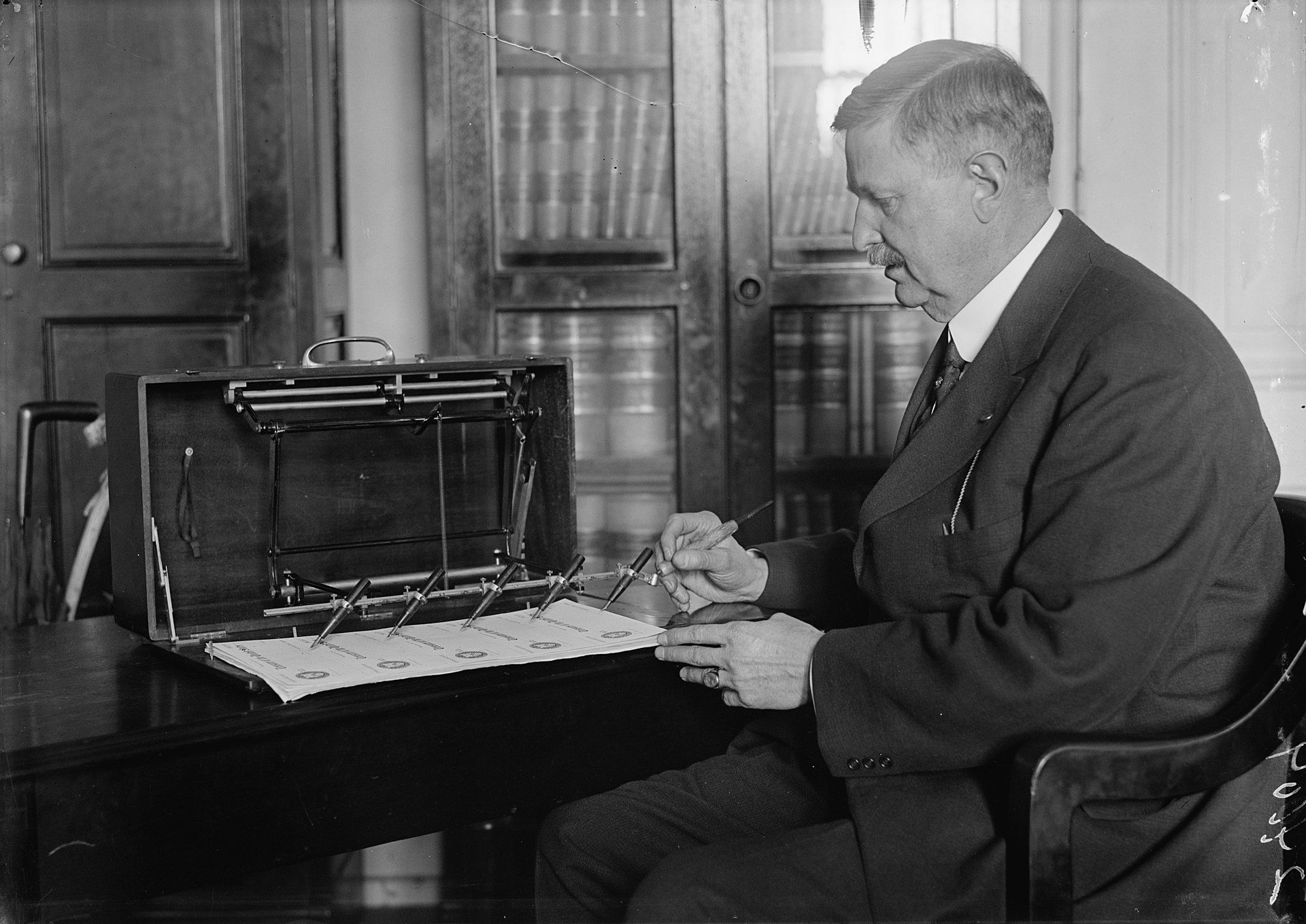
Honesty is one of the hallmarks of great writing. It is therefore ironic that every job advert demands ‘excellent communication skills’, full well knowing that 99% of professionals proclaiming to meet this requirement will be lying.
In this piece, I’ll show you how to write with AI, not by delegating to it and creating slop, but how to effectively collaborate with it. The framework applies broadly to anything you might want to make with AI, but we’ll use writing as the lens.
And, weirdly for a piece on AI, it begins in nature.
Brainstorming
Welcome to the writer’s desk in 2026.

This is where I draft my pieces now. I grab a pair of muddy walking boots, hit the trail, and press record.
Walking is one of the best stimulators for creative thought. Understandably, it’s had a long association with writing. Many successful authors throughout the years started their day with a walk. However, in eras gone by, attempting to write while you walk almost guarantee a trip to A&E.
Now, you only risk being sectioned as you can ramble about talking to yourself.
Get a recording app, then just start walking and talking. It doesn’t need to be perfect. The fact that I got caked in mud writing this draft should show you the actual practice at work. Expect to make mistakes. Once you’re done, you’ll end up with a recording that you can get a transcript from.

Transcripts are the gold dust of the AI era. A transcript can become anything you imagine – a blog, a thought leadership piece, a spec for a build idea you’ve had. They can come from meetings, coffees with peers, or chats with your partner.
Once you’ve got one, this is where the collaboration can begin.
Go to your AI of choice, attach your transcript, and say something like:
“I’ve been thinking about [topic]. I want to turn it into [desired output]. Could you help tidy up the attached transcript?”
However, this by itself is just delegation.
What we want is cognitive amplification, and this is built through collaboration. First, flip the model you’re working with to thinking mode. Then, in that same prompt, we’re going to add:
“While you’re looking at this, I’d value your input. Do you have any thoughts about the structure, the flow, or how I could improve this? Is there anything you think I’m missing? Ask me any questions you have about what I’m trying to do, and let’s have a conversation about it.”
You don’t necessarily need a transcript either. You could grab a whiteboard, brainstorm your idea, take a picture, and upload that to AI. You could also just start with AI – explain the concept and go from there.
What we’re looking for here is an outline of what it is you want – this can be a draft, a rough spec, or a loose plan.
Hemingway said it best:
“The first draft of everything is shit.”
Here’s how we improve it.
Research
This is my new pen.
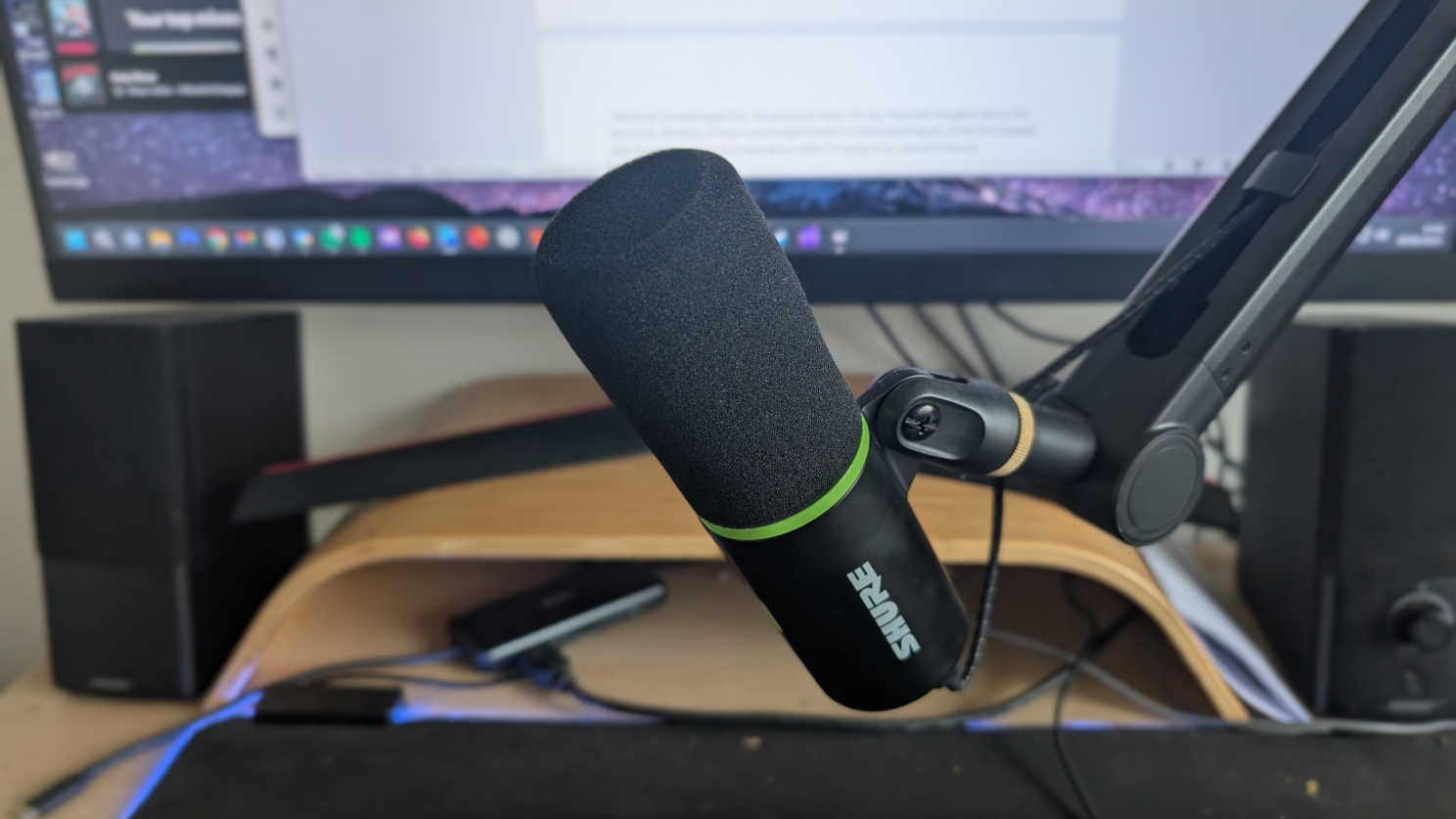
You might be thinking that’s not a pen, that’s a microphone. And you’d be right – I see you’ve played mic-y, pen-y before.
I bring it to your attention for two reasons.
One, you don’t need to write with your hands anymore. In 2026, your voice is the most efficient way to write authentically.
Second, you don’t know what you don’t know. With the speed of change we’re experiencing, it’s crucial you stay up to date. Fortunately, AI can help.
Most offerings will have some variant of ‘deep research mode’, where you ask AI to do a deep dive into a topic and it comes back with a McKinsey-level report. To do this, in the same conversation as our brainstorm, we’re going to ask:
“I want to thoroughly research this topic before we move it forward. Could you provide me with a prompt that will set up deep research which surfaces any new thinking, research, or approaches which evidence or contradict my draft? Ask me any clarifying questions.”
Take that prompt, open a new conversation, choosing a thinking model and turn deep research mode on, and fire.
It’ll take a while. We’ve gone from AI being able to work on a task for 36 seconds in 2023, to six hours in January 2026, to two weeks in February 2026. Leave it to cook while the enormity of the previous sentence floors you.
Planning and implementation
Once we’ve got our rough spec and our research, we need to turn it into something we can actually execute. For writing, that means answering a few core questions upfront:
- Role. What hat do you want the AI to wear? Strat comms specialist? Financial Times journalist? Your own ghost writer?
- Task. What’s the desired output? A blog? A press release? A LinkedIn post?
- Style. AI will default to type unless you steer it. Do you want it to be professional, satirical, engaging?
- Context. Your transcript, research, and draft are all context documents — as is anything useful you might have lying around in a deck or a document.
- Audience. Who is this for? Where do you intend to publish it? What level should AI be pitching at?
- Output. What’s the desired word count and format?
These are the core ingredients of a successful prompt. But this is something you should’ve learned in 2023. We’re going to take this framework and turn it into a full spec.
Ask yourself: “What’s my hook? What are my three key messages? What evidence supports each one? How will this piece flow? What’s the story I’m telling here? What do I want the audience to take away?”
If you don’t have answers to these questions, go back to your AI and brainstorm. Try: “Could you give me five potential hooks I could open this piece with?” or “How do I structure this piece so my key messages resonate with my audience?”
A point on style: if you don’t know what style you’re going for, open a new conversation and write:
“I’m preparing some writing and would like to create a style guide for AI to follow. Research what telltale signs of AI writing we can instruct it to avoid, ask me questions about my desired style, then let’s prepare a style guide I can use as context.”
Ask AI to pull your plan together into a full spec, which should be a solid outline which leaves little room for doubt.
The litmus test: if you gave this to a human writer, would they be able to write this piece for you? Because if they couldn’t, AI won’t be able to either.
Now, build it. Take your plan, put it in a new conversation with thinking mode on, and hit go. Read through the first draft, provide feedback, refine. Keep going until you’ve got something you’re happy with. For longer pieces, break this into stages — and if that’s the case, include those stages in your plan.
Or do what I do: write it yourself. Asking AI to do the thing you most enjoy doing is a surefire way to burn yourself out. Never let anything rob you of the joy of mastery.
Verify
Between every stage, you need to read back and verify the output. An error early on will compound in nonsense writing or hundreds of lines of unusable code later on.
Remember, your reputation is on the line. If your work comes across as error-prone slop, it’s not AI that loses credibility: it is you.
For writing, this is the editing stage. Does it sound like you, or does it sound like a machine? Have you checked the facts that you are presenting? Are there better ways of expressing something?
Antoine de Saint-Exupéry has a useful line to keep in mind:
“Perfection is achieved, not when there is nothing more to add, but when there is nothing left to take away.”
Again, we can use AI here. Take your final draft into a new chat and ask:
“Give me some critical feedback on this piece. What’s missing? What would you lose? What needs clarification?”
By the end of this process, you should have a piece of work you are proud to call your own. Not some throwaway slop, but something you’ve invested time into crafting and gives your audience a reason to put their time into reading.
There is, of course, much more to learn about the craft of writing. However, both writing and AI are best learned through experience: you need to put in the reps. As you do, get AI to collaborate with you, to coach you, and to give you feedback.
The best way to learn how to AI is to ask AI itself. This is because AI is not a tool, it is intelligence. To succeed in the world ahead, you must meet intelligence with intelligence.
Thanks for reading. If you have questions, ask in the comments. If you enjoyed this piece, a like, share or a subscribe is always welcome.